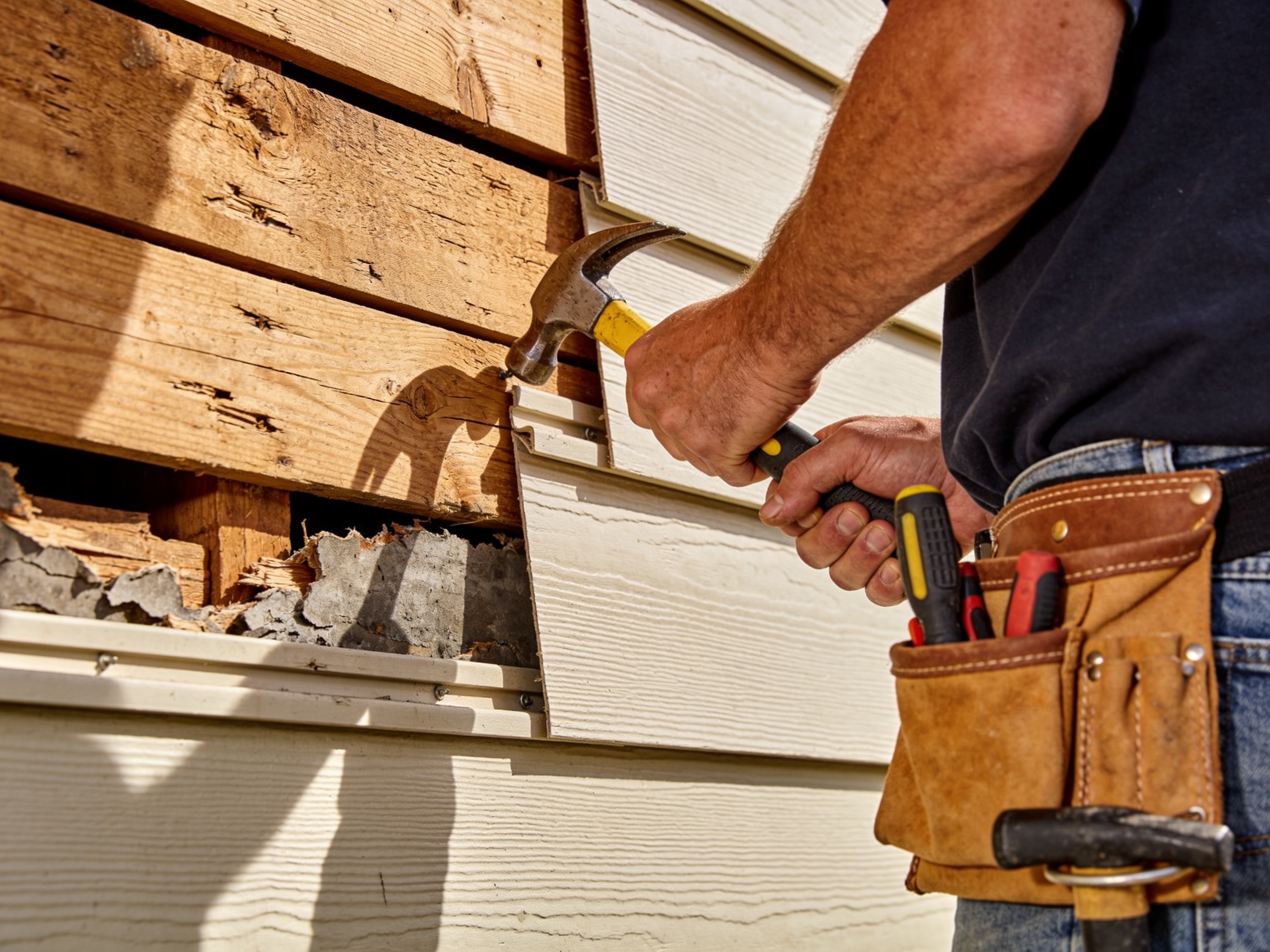
Wood siding in Sugar Land faces constant stress from hot humid summers that trap moisture against the house, especially in neighborhoods like First Colony and Riverstone where many homes built in the 1980s and 1990s have original cedar or pine boards. Providers we connect you with routinely find rot starting at the bottom courses near the Brazos River floodplain where soil stays damp longer. Proper flashing and ventilation details matter here because mild winters give little drying time before the next humid season returns.
Homes in Telfair often show paint failure and cupping on south and west walls after repeated summer storms. Local providers check for hidden damage behind the siding by removing select boards rather than relying on surface inspection alone. They also look at how close landscaping sits to the foundation, since irrigation overspray and poor drainage accelerate decay in Fort Bend clay soils.
When connecting you with providers, we emphasize jobs that include replacing only the damaged sections instead of full replacement whenever possible. They use pressure-treated lumber or fiber-cement transitions at the base where wood meets grade, a common detail needed because many Sugar Land lots sit low relative to the street. This approach keeps costs down while addressing the real moisture paths created by the region's weather patterns.
Technician insight
In Sugar Land the thing that catches most people out with Wood Siding Repair is how quickly rot travels upward from the bottom plates once humidity and irrigation keep the base wet. Homes in First Colony and along the Brazos often have original siding sitting too close to grade with no transition flashing, so a small soft spot becomes several feet of damage before anyone notices.
Bottom Course Rot Near Riverstone
A homeowner in Riverstone noticed buckling boards after several humid summers. The connected provider found the original siding installed without a proper base flashing and with soil piled against the wall. They replaced the lower three courses with treated lumber, added a metal transition, and corrected the grade. The repair has held without further moisture issues through multiple seasons.
How it works
- 1
Initial Assessment
We connect you with a provider who visits the property in Sugar Land to inspect the wood siding condition, noting damage patterns common in First Colony and Telfair homes.
- 2
Detailed Diagnosis
The provider examines moisture intrusion points, checks flashing around windows, and identifies whether rot extends into sheathing or framing.
- 3
Scope and Materials
They outline which boards need replacement, recommend compatible wood species or transitions, and explain how local humidity affects the repair longevity.
- 4
Repair Execution
Work proceeds section by section with proper sealing and ventilation improvements suited to Fort Bend conditions.
- 5
Final Review
The provider walks the completed areas with you and points out maintenance steps that help the repair hold up through humid summers.
Pricing
Cost depends on the number of boards affected, access difficulty, and whether underlying sheathing requires repair.