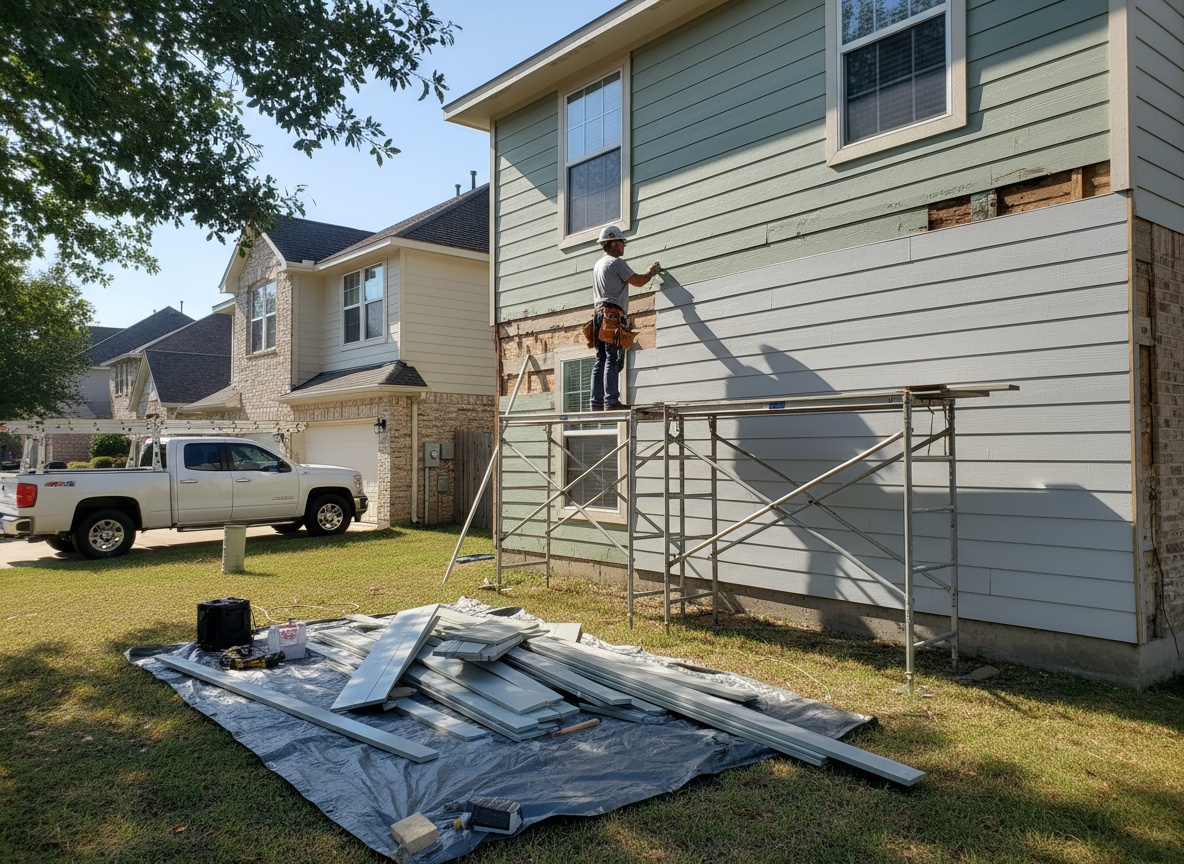
Sugar Land homes in neighborhoods like First Colony and Riverstone often feature wood or fiber cement siding installed in the 1980s through early 2000s. Hot humid summers accelerate rot at joints and around windows while mild winters allow hidden moisture to linger. Replacement requires removing damaged layers, checking sheathing for Fort Bend County wind-driven rain exposure, and selecting materials that handle expansion from repeated humidity cycles without trapping vapor.
Properties near the Brazos River or in Telfair face additional soil movement and occasional flooding that can warp lower courses. Local providers familiar with these conditions inspect for termite damage common after prolonged dampness and ensure new siding maintains proper clearance from grade. Houston-area supply chains mean common selections like engineered wood or vinyl are readily available, but proper flashing details at rooflines and gables determine long-term performance more than the material itself.
We connect homeowners with independent contractors based at 14096 Southwest Fwy who understand Sugar Land permitting requirements and typical two-story elevations in these subdivisions. The work usually includes full tear-off rather than overlay to avoid trapping old moisture, followed by new housewrap and integrated flashing at penetrations.
Technician insight
In Sugar Land the thing that catches most people out with siding replacement is hidden rot behind the first few courses near the ground in First Colony homes. The combination of humid summers and occasional Brazos River moisture means you often find the sheathing needs work once the old siding comes off, and skipping a full inspection there leads to callbacks within two seasons.
Telfair Two-Story Replacement
Homeowner noticed buckling along the south wall after several humid summers. Inspection revealed saturated sheathing and minor termite activity at the base. Connected provider performed full tear-off, replaced damaged sections, added upgraded flashing, and installed fiber cement siding with proper clearance. The home now has better airflow and no recurring moisture issues.
How it works
- 1
Initial Assessment
Providers evaluate existing siding condition, underlying structure, and moisture issues specific to your Sugar Land neighborhood.
- 2
Material Selection
Discuss options suited to Fort Bend humidity and wind exposure, including fiber cement, engineered wood, or vinyl profiles.
- 3
Preparation and Removal
Old siding is removed, sheathing inspected, and any rot or damage repaired before new housewrap is installed.
- 4
Installation and Finishing
New siding is applied with proper flashing, ventilation gaps, and trim details to handle local weather cycles.
Pricing
Pricing depends on home size, stories, material choice, and extent of underlying repairs; request quotes from connected local providers for accurate estimates.