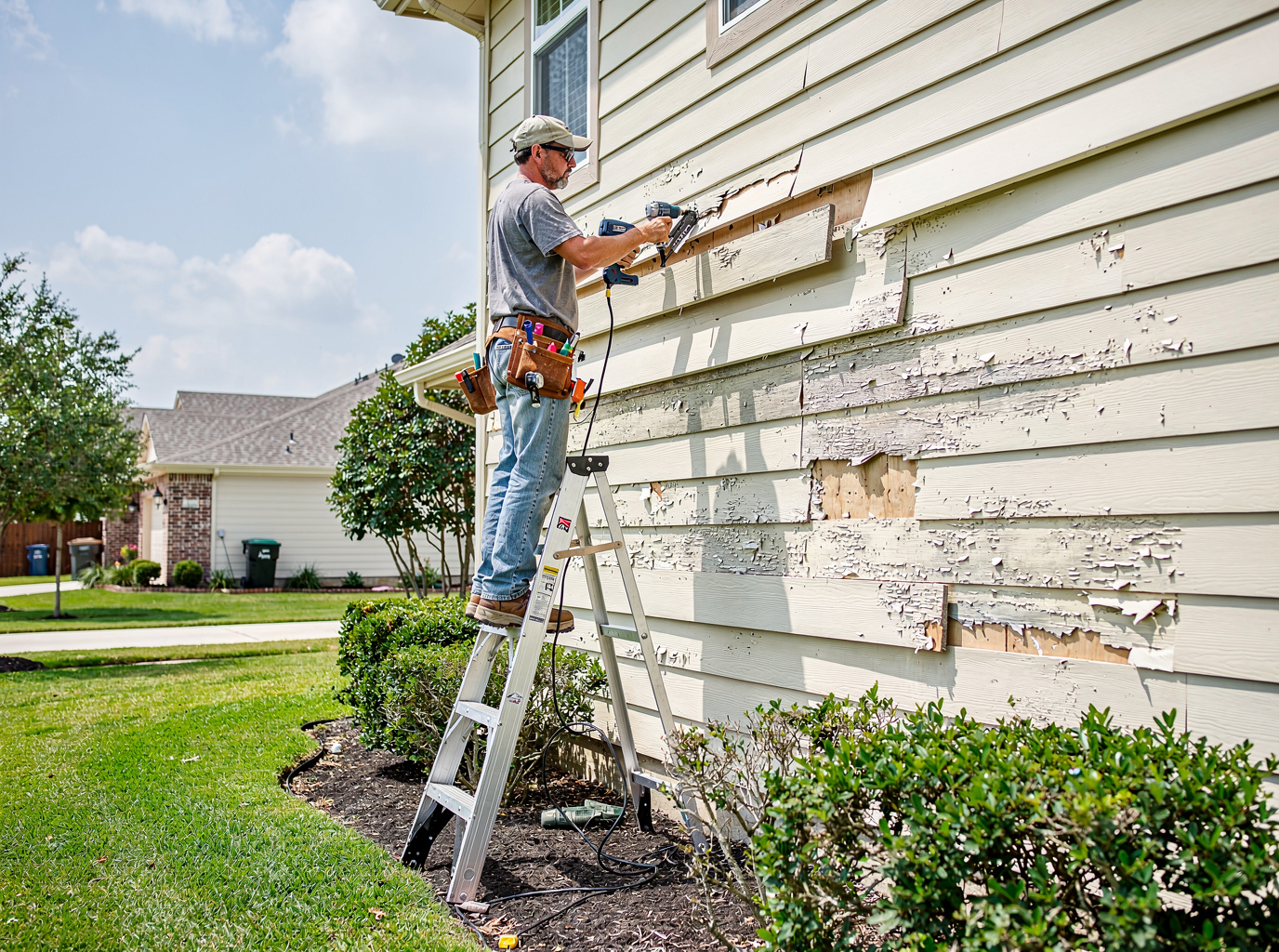
Sugar Land homes in neighborhoods like First Colony and Telfair often feature vinyl or fiber cement siding installed during the 1990s and early 2000s building boom in Fort Bend County. Hot humid summers trap moisture behind panels, especially near the Brazos River where humidity stays elevated year-round. This leads to hidden wood rot at seams and around window penetrations that homeowners miss until interior walls show discoloration. Mild winters do little to dry out trapped water, so repairs frequently involve removing multiple courses rather than spot fixes to prevent recurrence.
Providers connected through this service assess substrate condition before any panel replacement because older Fort Bend stock commonly has OSB sheathing that swells when exposed. Near Houston's urban edge, wind-driven rain during summer storms can force water under poorly sealed joints, accelerating failure in Riverstone properties built on slightly lower terrain. Local crews know to check for termite damage common in the area's soil conditions and to use corrosion-resistant fasteners that hold up better against the persistent dampness than standard options.
Repair work here also accounts for expansion gaps needed in fiber cement products due to temperature swings, even with mild winters. Connecting with providers familiar with Sugar Land Town Square area codes ensures any exterior changes meet Fort Bend permitting rules for drainage and setbacks. Homeowners in these neighborhoods benefit from providers who carry the right flashing details for gable ends and porch transitions that see the most weather exposure.
Technician insight
In Sugar Land, the thing that catches most people out with Siding Repair is hidden rot behind vinyl in 1990s First Colony homes where the Brazos River humidity keeps sheathing damp even after mild winters, so pulling just one panel often turns into a multi-course job once you open it up.
Riverstone Moisture Intrusion
Homeowner noticed bubbling paint along the rear elevation after summer rains. The connected provider found saturated OSB and early termite activity near the foundation on the lower lot. They replaced affected sections with proper flashing and drainage improvements suited to the area's soil. The siding now sheds water effectively without recurring issues.
How it works
- 1
Initial Contact
Submit details about your siding issue and location in Sugar Land or nearby Fort Bend neighborhoods.
- 2
Provider Matching
We connect you with independent local providers experienced in the area's housing stock and climate conditions.
- 3
On-Site Assessment
The matched provider inspects for moisture damage, rot, and substrate issues common near the Brazos River.
- 4
Scope and Scheduling
Receive a clear plan for repairs and arrange timing that works with your schedule.
- 5
Work Completion
The provider completes the siding repair using methods suited to humid summers and local soil conditions.
Pricing
Costs depend on damage extent, siding type, and access in neighborhoods like Telfair or near Sugar Land Town Square.